
Work is being redesigned. Censia AI is the context layer for the human and AI enterprise.
Censia makes the workforce development mobility upskilling benchmarking skills-gap analysis planning succession skills tasks agents work.


Featured Customer

Verizon leveraged Censia AI to power its workforce transformation.
$75M+
Year-one ROI
82%
Improvement in retention of top talent
26%
Redeployment increase
100%
Workday Profile Completion
Featured Customer

Verizon is leveraging Censia AI to power its transformation inside Workday.
- $29M in Efficiency Unlock
Hours spent on manual workflow, reclaimed and converted into productive output. At scale, across the enterprise. - 63% Cross-Functional Movement
Increased talent fluidity across functions, into the right roles. Based on real capability, not org chart assumptions. - 100% Profile Completion Increased talent fluidity across functions, into the right roles. Based on real capability, not org chart assumptions.
$75M+
Year-one ROI
82%
Improvement in retention of top talent
26%
Redeployment increase
Context is the new edge.
Three layers of context. One people graph beneath every workforce decision.
People, capabilities, roles, skills and organizations, all connected.
Global Context
Internal Context
Agentic Insights
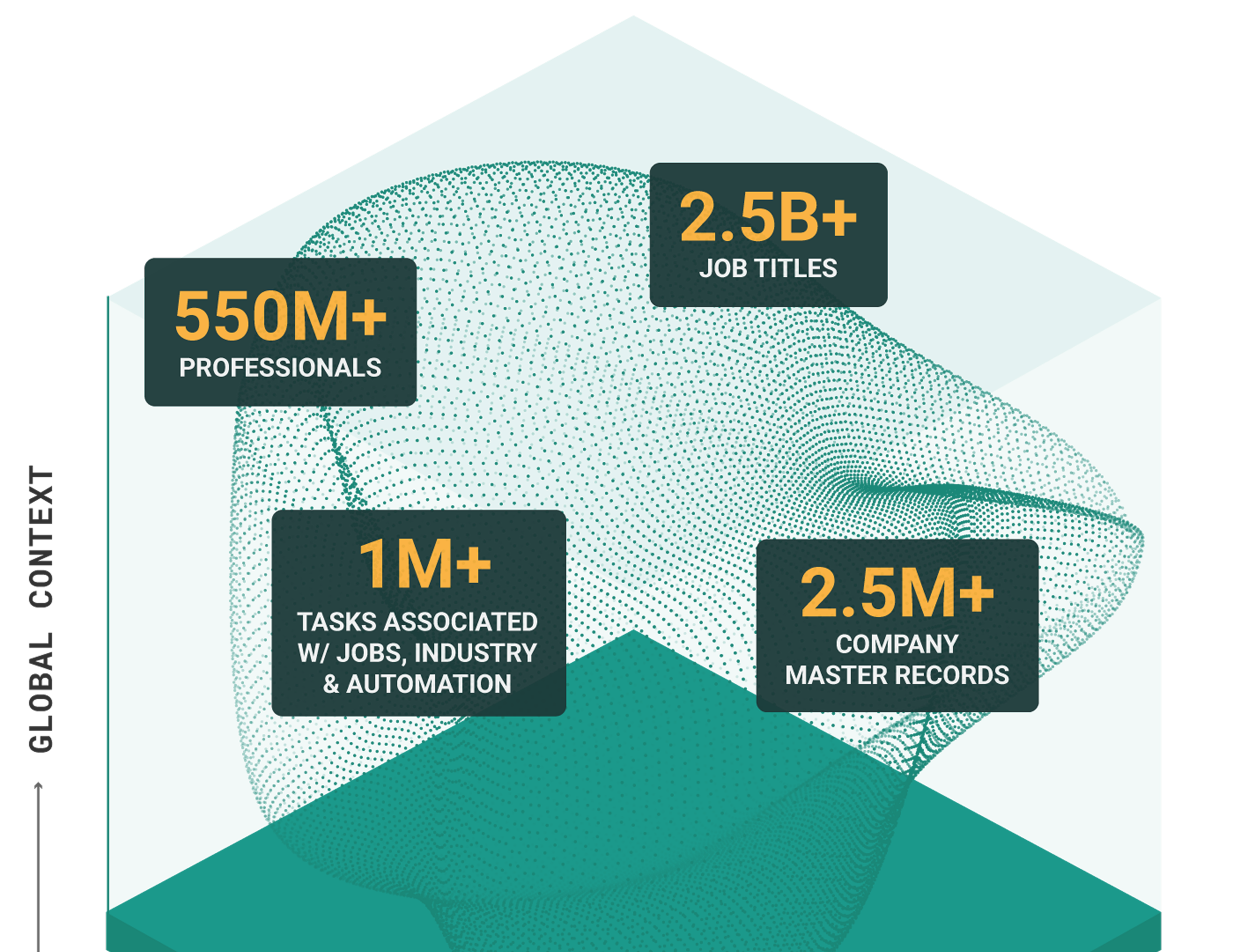
The Global Context Layer
The most complete picture of the global workforce in the market.
People: Built on a decade of workforce data across hundreds of millions of people, Censia tells the world’s largest companies what their people can do, where AI changes the work, and how to deploy human and digital labor together.
Companies: Real-time growth and industry signals across your competitors, so your workforce plan gets ahead of the market instead of reacting to it.
Jobs: Every open role and task, compensation benchmarks, and AI exposure insights, so you know which roles are changing to drive transformation.
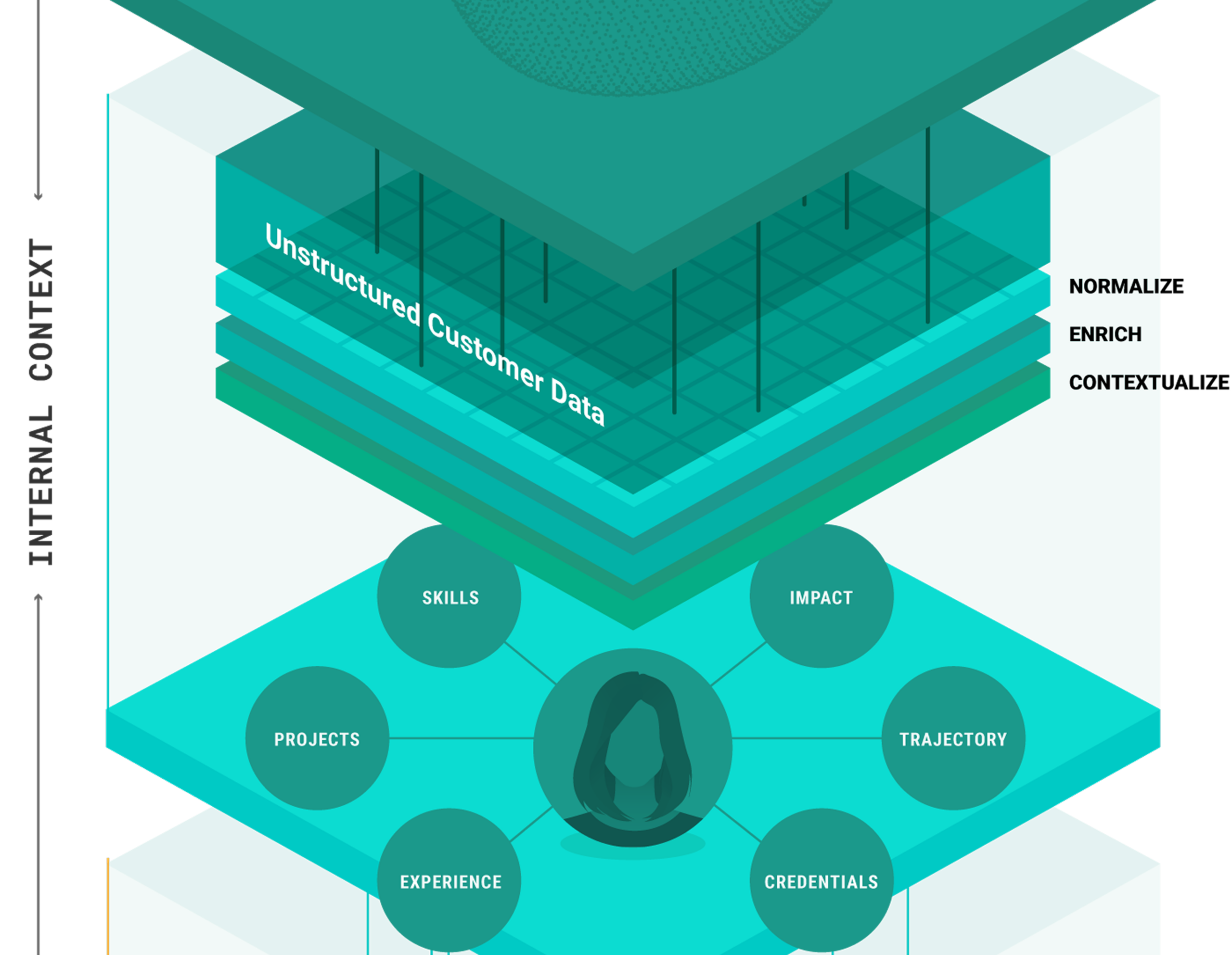
Your Internal Context Layer
A private, dynamic picture of your business.
Where every person and job is enriched by AI — with tasks, proficiencies, experience, career progression, and capabilities. Built from a decade of our workforce context, enriching your own data. No employee burden. Live in 13 weeks.
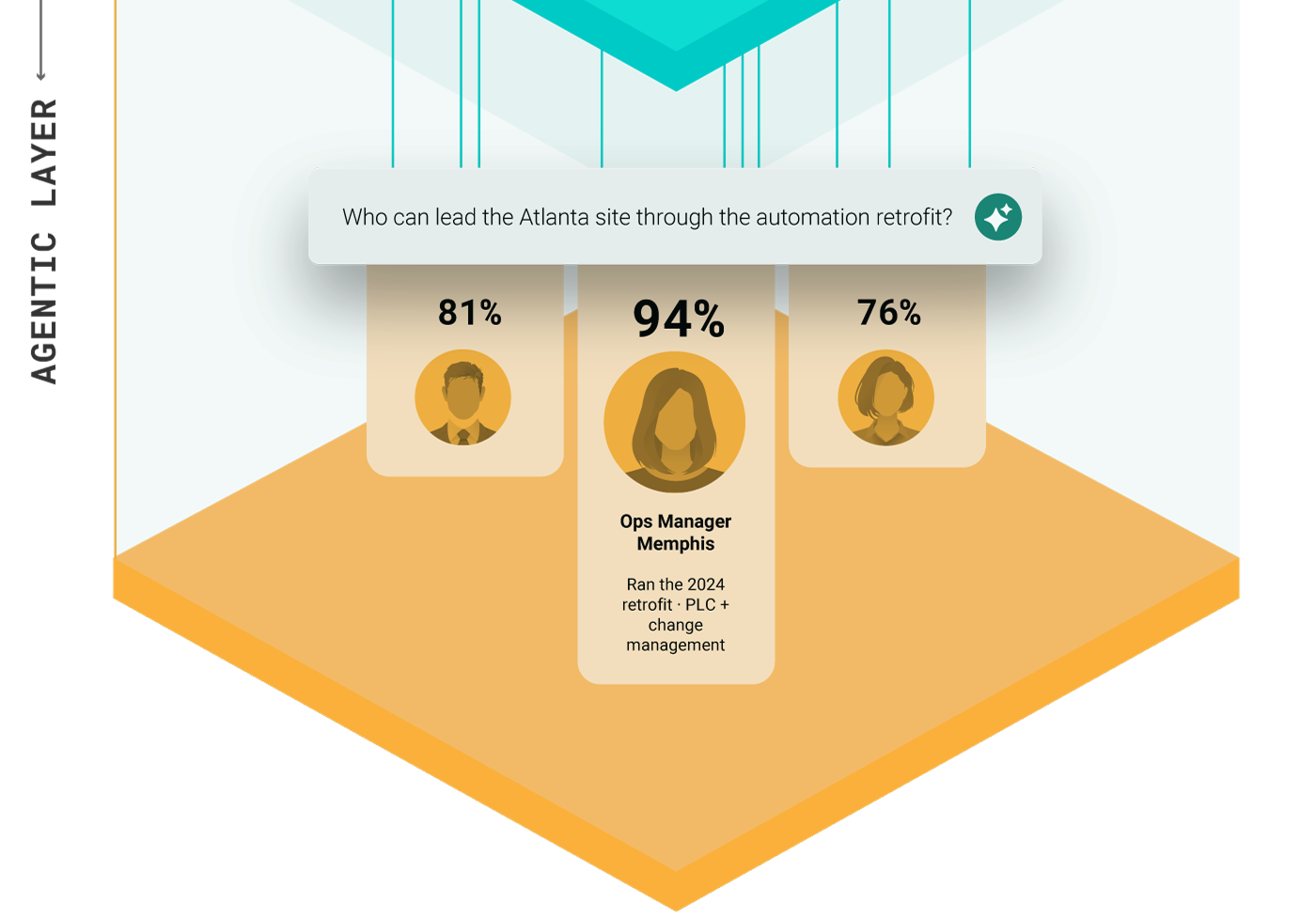
The Agentic Layer
AI agents taking action across the talent lifecycle
Work Intelligence: Censia’s AI intelligence, inside the tools you already use. Embedded and seamlessly running within Workday, Sana, Microsoft Copilot, Claude, ChatGPT, Gemini, Salesforce, SAP, and more. Move beyond siloed systems to seamlessly redesign your workforce. Our agents turn work risk into work advantage.
Executive Intelligence: Understand your leadership pipeline before a critical gap turns into an expensive search. With succession depth, dynamic executive search, external market mapping, M&A due diligence.
Coordinated Agentic Workflows: A suite of AI agents built for workforce planning and work redesign. Ask in plain language, get a straight answer. Across your business and your competitors. No new interface. No training required.
The world's most senior people leaders trust Censia AI.
"We bought a Ferrari with Workday, but we're driving it like a VW. Censia changed everything."
Fortune 100 Insurance Company
CHRO
"Censia trapped lightning in a bottle."
Fortune 500 Retail Company
CHRO
“Censia is the central nervous system of the Human Capital Management system.”
Fortune 100 Insurance Company
Head of Talent
“Censia didn’t just move the needle — it made the system we already paid for actually work.”
Fortune 100 Technology Company
Chief Supply Chain Officer
“We tried everything else. Censia was the only one that worked — fast, at scale, without burdening the business.”
Fortune 50 Telecom Company
Head of Performance

Leadership across the globe
and across the industry.
recognized by



FAQ
What is Censia AI?
Censia AI is a workforce intelligence platform that turns people data into business impact: the intelligence behind an organization’s headcount, automation, and org-design decisions. It works as a context layer embedded in Workday, enriching every profile with the context behind each skill (the role it lived in, the capability it signals, and the decision it makes possible), with no surveys and no self-reporting.
Built on a decade of continuous workforce signals (550M+ golden records, 1.3B+ job titles, and 800K+ tasks), Censia AI gives leaders a clear, current picture of what their people can do and where they can go as work is redesigned.
What data is Censia AI built on?
Censia AI is built on a decade of continuously enriched workforce data: 550M+ golden records of professional profiles, 1.3B+ job titles, 2.5M+ company records, 800K+ tasks, and 50,000+ skills and roles. Rather than relying on self-reported information, it infers and validates skills from real-world evidence and keeps that intelligence current as roles and industries change.
That depth is what lets Censia AI supply the context behind every skill (the role it lived in, the capability it signals, the decision it makes possible), the difference between a keyword on a profile and intelligence a leader can act on.
How does Censia AI integrate with Workday?
Censia AI runs inside Workday as a system of intelligence on top of Workday’s system of record. Two products are live on the Workday Marketplace today: Employee Profile Enrichment, which automatically enriches every profile with AI-inferred skills and writes back into Skills Cloud natively, and the Job Profile Enrichment Assistant, which recommends updates to job profiles as skills and proficiency expectations shift.
It requires no surveys and no self-reporting. Every recommendation carries clear rationale and routes through a governed approval workflow with human sign-off before anything publishes, and implementation runs 90 to 120 days, as fast as roughly 13 weeks.
Does Censia AI work with systems other than Workday?
Yes. While Censia AI runs natively inside Workday, it isn’t limited to it. Censia’s intelligence is designed to work inside the tools your teams already use — embedded and running within Workday, Sana, Microsoft Copilot, Claude, ChatGPT, Gemini, Salesforce, and SAP.
That’s the point of the agentic layer: instead of forcing your workforce data into one more siloed system, Censia AI meets your people where they already work. The same enriched skill and task intelligence that powers decisions in Workday shows up across your broader stack—so workforce insight isn’t trapped in a single platform, and there’s no new interface to learn.
Who is Censia AI for?
Censia AI is built for enterprise talent and business leaders (CHROs, heads of talent, workforce planning teams, and talent acquisition leaders) who are being pulled into the biggest calls of the year: where to cut, what to automate, how to reorganize, and who to move.
It gives them a clear, current picture of what their people can do and where they can go, so those calls become decisions they can defend rather than bets they hope pay off.
What is workforce intelligence?
Workforce intelligence is the practice of turning talent data into a clear, current understanding of what an organization’s people can do and how that is changing, so leaders can act on it. It connects skills, roles, and potential across the workforce to reveal capability gaps and where talent can move.
As AI redesigns work itself, the edge no longer belongs to whoever has the most skills data. It belongs to whoever has the most context behind it. Workforce intelligence is the decision-making layer on top of the systems that only store the data.
What is talent intelligence?
Talent intelligence is the use of AI to turn workforce data (skills, roles, experience, and potential) into decisions organizations can act on. It reads the signals inside HR systems to answer who can do the work, who is ready to grow, and where the gaps are.
The shift it represents is from record-keeping to decision-making. What makes that intelligence trustworthy is context: the same skill means something different depending on the role it lived in, the scale it operated at, and the capability it signals.
What is skills intelligence?
Skills intelligence is the ability to see, validate, and act on the skills across a workforce in real time. Instead of relying on job titles or self-reported profiles, it infers skills from real evidence (work history, projects, and role context) and keeps them current.
The difference that matters isn’t more skills data; it’s the context behind each skill: the role it came from, the capability it signals, the work it makes possible next. That context is what turns a keyword list into intelligence you can act on.
What does it mean for talent data to be a context layer?
A context layer sits on top of the systems that store talent data and adds the context that makes it usable for decisions, enriching each skill with the role it lived in, the capability it signals, and the action it makes possible. The system of record still holds the data; the context layer turns it into intelligence.
Censia AI builds this in three layers: a global context layer (the outside-in market picture of the workforce), an internal context layer (your own workforce, enriched and kept live), and an agentic layer that turns the gap between what you have and what you need into action.
What are AI-validated skills?
AI-validated skills are skills confirmed through evidence rather than self-assessment. Instead of trusting that someone listed a skill on a profile, AI cross-references real signals (role history, adjacent skills, project context) to determine which skills a person genuinely has and at what depth.
Self-reported data is a label; validated, context-rich skills are intelligence. That difference is what makes a workforce strategy trustworthy enough to base headcount, automation, and org-design decisions on.