
WORK INTELLIGENCE
Unlock your workforce. Transform work.
Censia’s context layer delivers AI-ready, validated intelligence across every role, skill, task, and capability. All accessible directly in the platforms you already run, so your leaders can focus on the calls only they can make: who to promote, where to deploy, and how to redesign the work itself.
Same people graph, two ways to activate it.
You have a dynamic context layer — here’s how it shows up where your team already works.

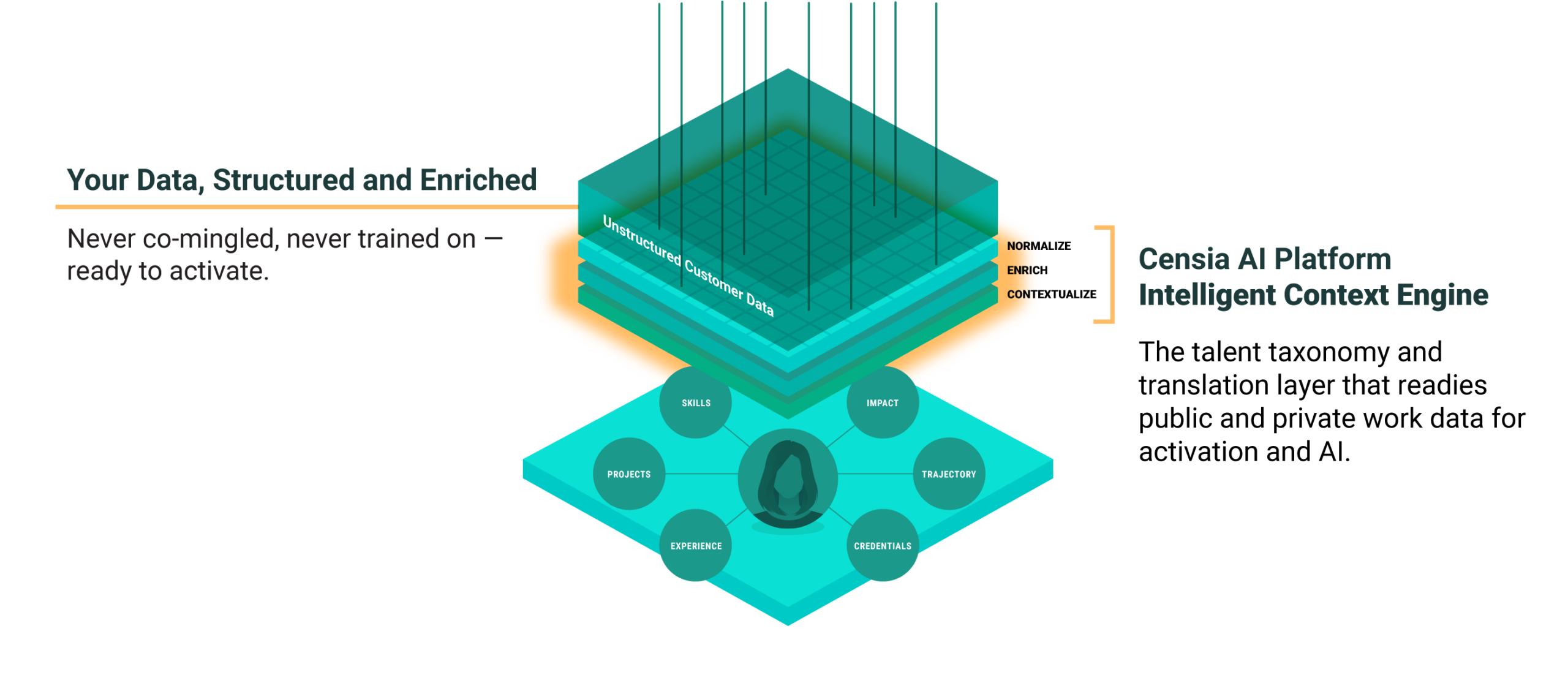
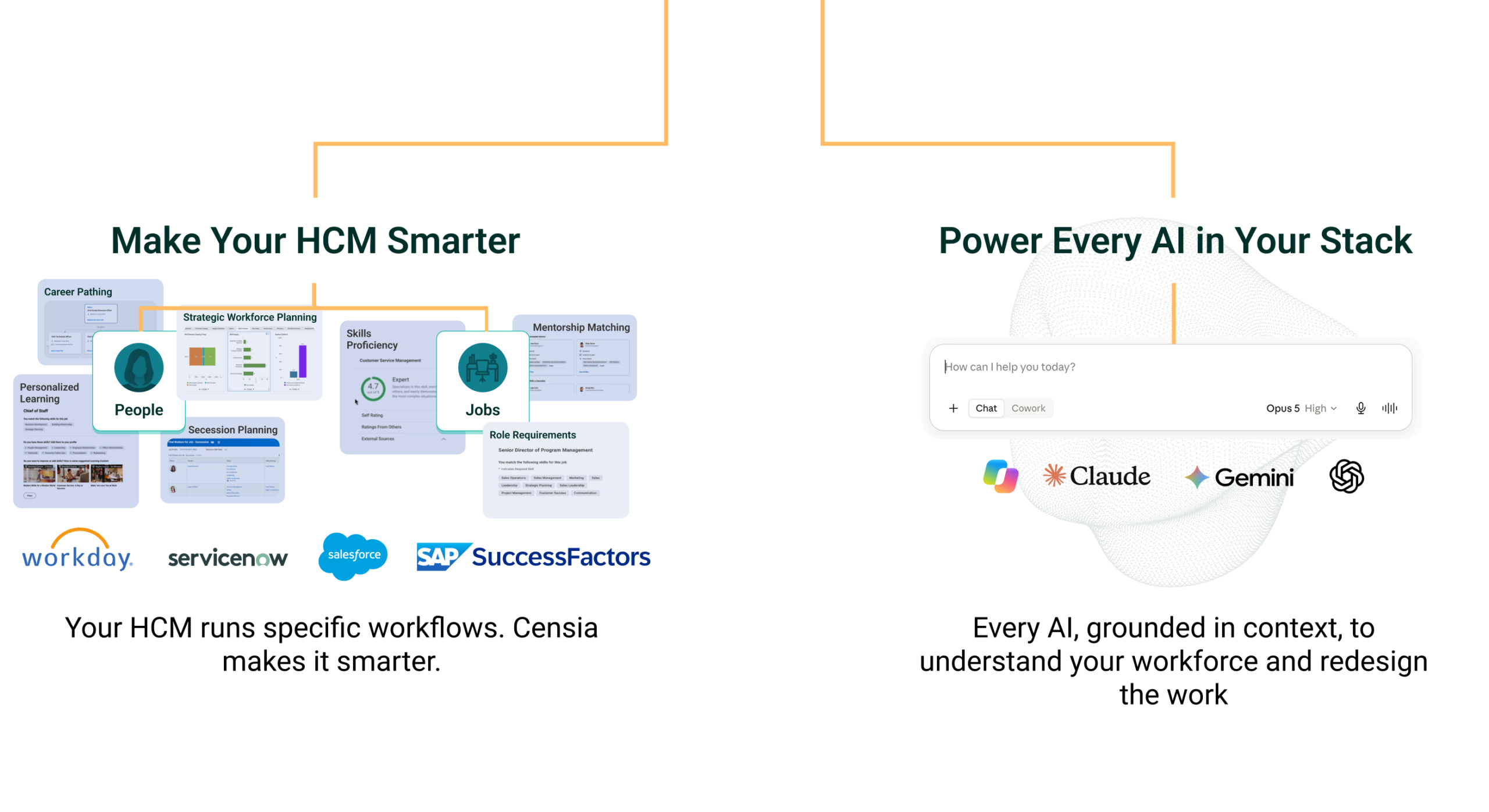
Same people graph, two ways to activate it.
You have a dynamic context layer — here’s how it shows up where your team already works.
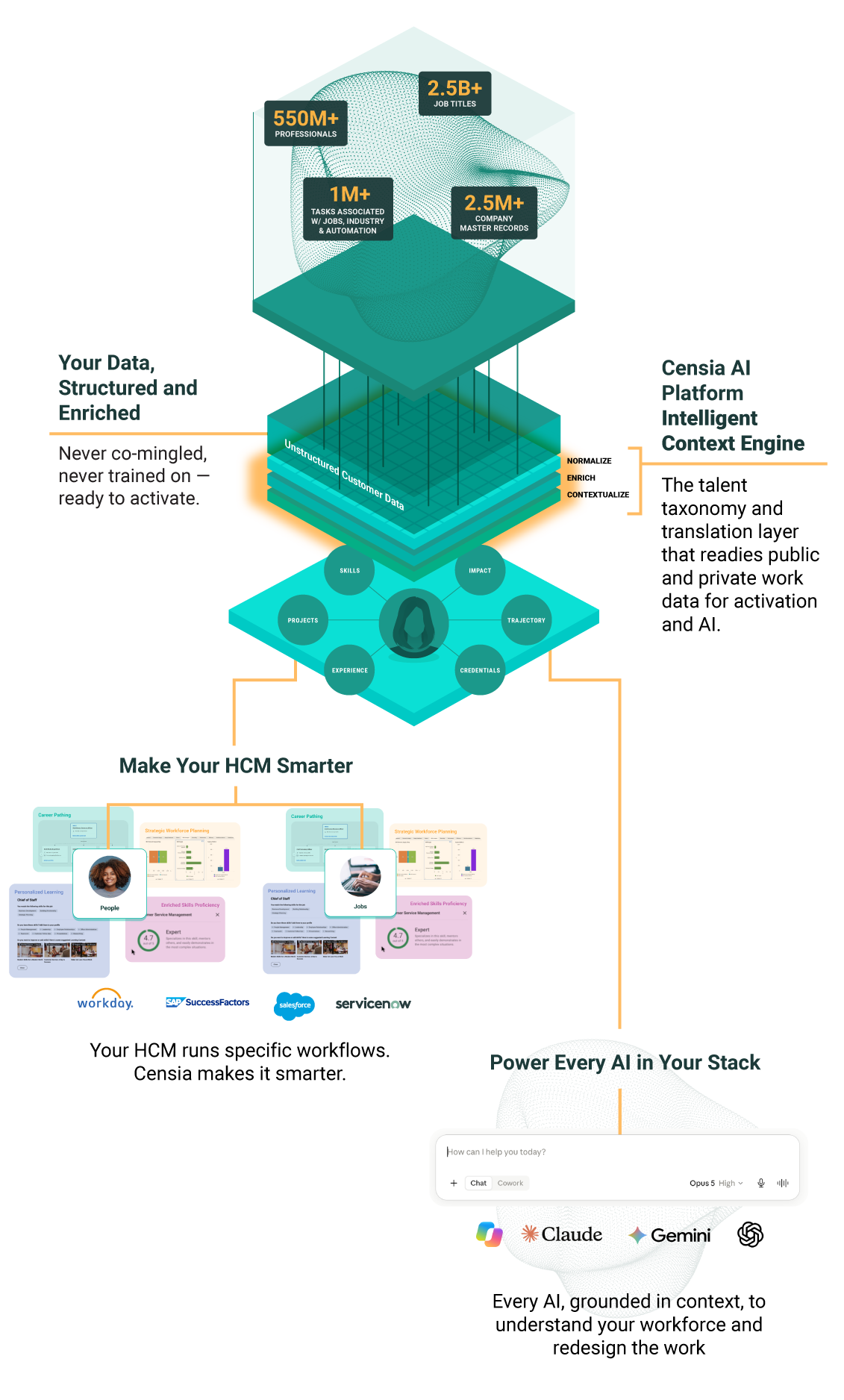
TURN WORKFORCE CONTEXT INTO WORKFORCE DECISIONS.
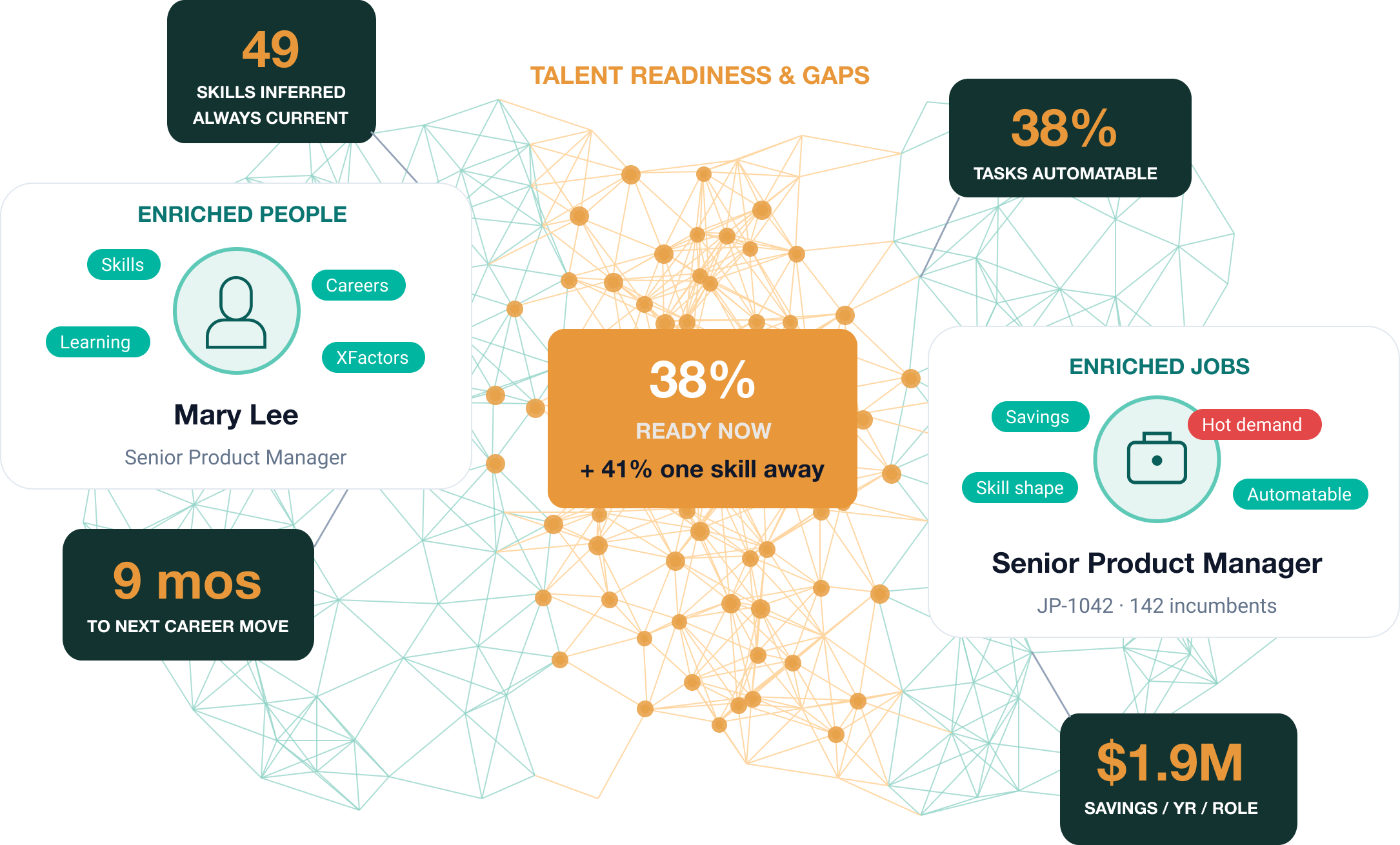
Better intelligence, better decisions. At the new speed of work.
When your people systems rely on incomplete or inaccurate data, AI just automates your blind spots. Real work intelligence starts with real context: an accurate, current picture of your workforce, not just their title or last review.
Know Your People
Every capability, every trajectory, every learning path: real intelligence on what people can do next.
Know Your Jobs
Every role, aligned to what the market needs today and will demand tomorrow: intelligence built for real decisions.
Redesign Work
AI-driven workforce transformation puts the right people on the right work, as fast as work changes.
Featured Customer

Verizon leveraged Censia AI to power its workforce transformation.
$75M+
Year-one ROI
82%
Improvement in retention of top talent
26%
Redeployment increase
100%
Workday Profile Completion
You have the workforce systems.
You need the fuel to power them.
FAQ
Why aren't job titles enough to manage talent anymore?
Job titles describe a box on an org chart; they say little about what a person can actually do or where they can go next. Two people with the same title often have very different skills, and the most valuable capabilities frequently sit outside a person’s formal role.
As AI redesigns work, bundling some tasks into automation and elevating new capabilities, titles become an outdated proxy for what leaders actually need to see. The organizations pulling ahead read capability and context, not just the title.
What is succession planning?
Succession planning is the process of identifying and developing the people who can step into critical roles when they open up, so the business isn’t exposed when a key leader leaves.
Most plans cover a handful of named successors and go stale quickly. Reading capability and context across the whole organization widens the field, surfacing ready and near-ready leaders, benchmarked against the market, including people no one had on the list.
What is workforce planning?
Workforce planning is the process of making sure an organization has the right people, with the right skills, in the right roles, at the right time. It aligns hiring, development, and internal movement with where the business is headed.
It works best when it is continuous and context-rich rather than an annual headcount exercise, which depends on a live view of what your workforce can actually do. That view is what turns headcount, automation, and org-design calls into decisions you can defend.
What is skills-based hiring?
Skills-based hiring evaluates candidates on what they can actually do rather than on credentials like degrees or past job titles. It widens the talent pool, improves fit, and opens roles to capable people that traditional filters would screen out.
It only works if you can read skills accurately and in context, not just match keywords. Understanding the role a skill lived in and the capability it signals is what separates a real match from a resume that happens to use the right words.
What is strategic workforce planning?
Strategic workforce planning looks beyond immediate hiring to anticipate the skills and roles a business will need over the coming years, and builds a plan to close the gap. It connects long-term strategy to concrete talent decisions: what to build, buy, borrow, or automate.
The limiting factor has always been visibility into current capability. A context-rich, always-current picture of the workforce is what lets leaders model where to grow, redeploy, or automate before the moment passes.
What is internal mobility?
Internal mobility is the movement of employees into new roles, projects, and opportunities within the same organization, rather than filling those needs by hiring externally. It improves retention, lowers hiring costs, and puts existing talent to better use.
Its biggest barrier is visibility: people can’t move into roles they can’t see themselves in, and leaders can’t move them without seeing their capabilities. Making skills and context visible turns the internal job market real, often before the company looks outside.
Will AI replace recruiters?
No. AI is changing what recruiters do, not replacing them. It takes over the high-volume, data-heavy work of sourcing, screening, and matching so recruiters can focus on judgment, relationships, and candidate experience.
As AI redesigns the work, the recruiters who pull ahead use it to see candidates in context (capability and trajectory, not keywords) and keep the human decisions human. That is AI for impact, not theater.
How does AI improve candidate matching in recruiting?
AI improves matching by looking past keywords and titles to the actual skills a role requires and a candidate holds. It builds complete profiles, infers skills that aren’t explicitly listed, and ranks candidates by genuine fit rather than resume overlap.
The quality of the match depends on context: the role a skill came from, the scale it operated at, the capability it signals. Matching on context surfaces strong candidates that keyword search misses.
How do CHROs use AI for strategic workforce planning?
CHROs use AI to see their workforce as it actually is, a real-time map of skills, gaps, and potential, and to model how it needs to change. AI infers and validates skills at scale and surfaces internal talent that can be redeployed or reskilled before reaching for external hiring.
This lets a CHRO walk into the headcount, automation, and org-design conversation with the clearest picture in the room, leading the decision rather than reacting to a number finance already set.